
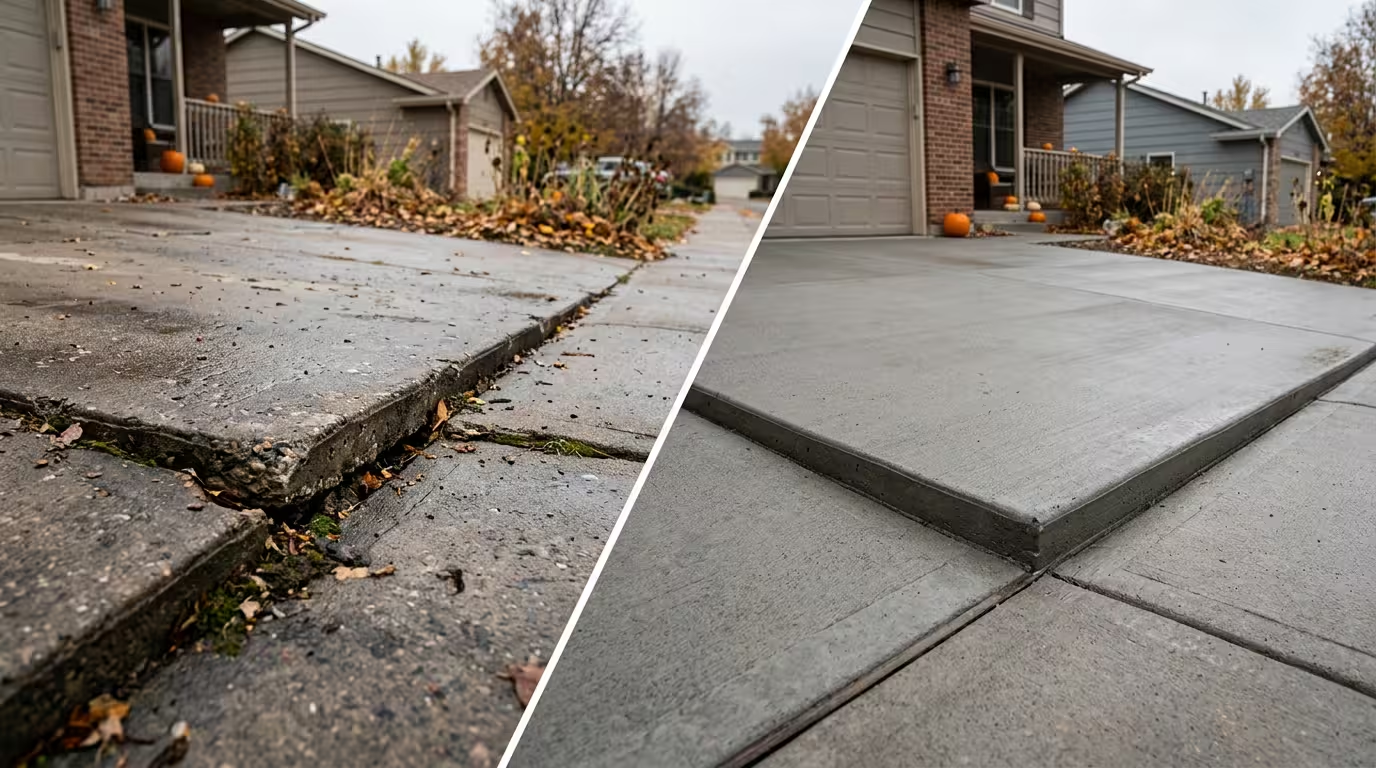
If you've got a sunken driveway, a tilted patio slab, or a sidewalk section that's become a trip hazard, you're facing a decision every Denver homeowner eventually runs into: concrete lifting versus full replacement. Both fix the problem, but they differ a lot in cost, timeline, and how long the fix actually lasts. After evaluating hundreds of sunken and settled slabs across the Denver metro, CC Concrete LLC breaks down how to make the right call for your property.
This guide covers what causes concrete to sink in the first place, when lifting makes sense, when replacement is the better investment, and what each option actually costs.
Not sure which option is right for your slab? Request a free on-site estimate from CC Concrete LLC →
Why concrete sinks and settles in Denver
Concrete itself rarely fails on its own — it's almost always what's underneath it that causes the problem. Understanding the cause helps determine whether lifting will actually solve the issue long-term.
- Poor sub-base compaction: If the gravel base wasn't properly compacted during the original pour, the slab settles unevenly over time.
- Colorado's clay soils: Expansive clay soil common across the Denver metro shrinks and swells with moisture changes, shifting slabs above it.
- Erosion under the slab: Water runoff can wash away soil beneath a driveway or walkway, leaving a void the concrete eventually sinks into.
- Freeze-thaw cycling: Repeated freezing and thawing gradually shifts soil and undermines slab support.
When concrete lifting is the right call
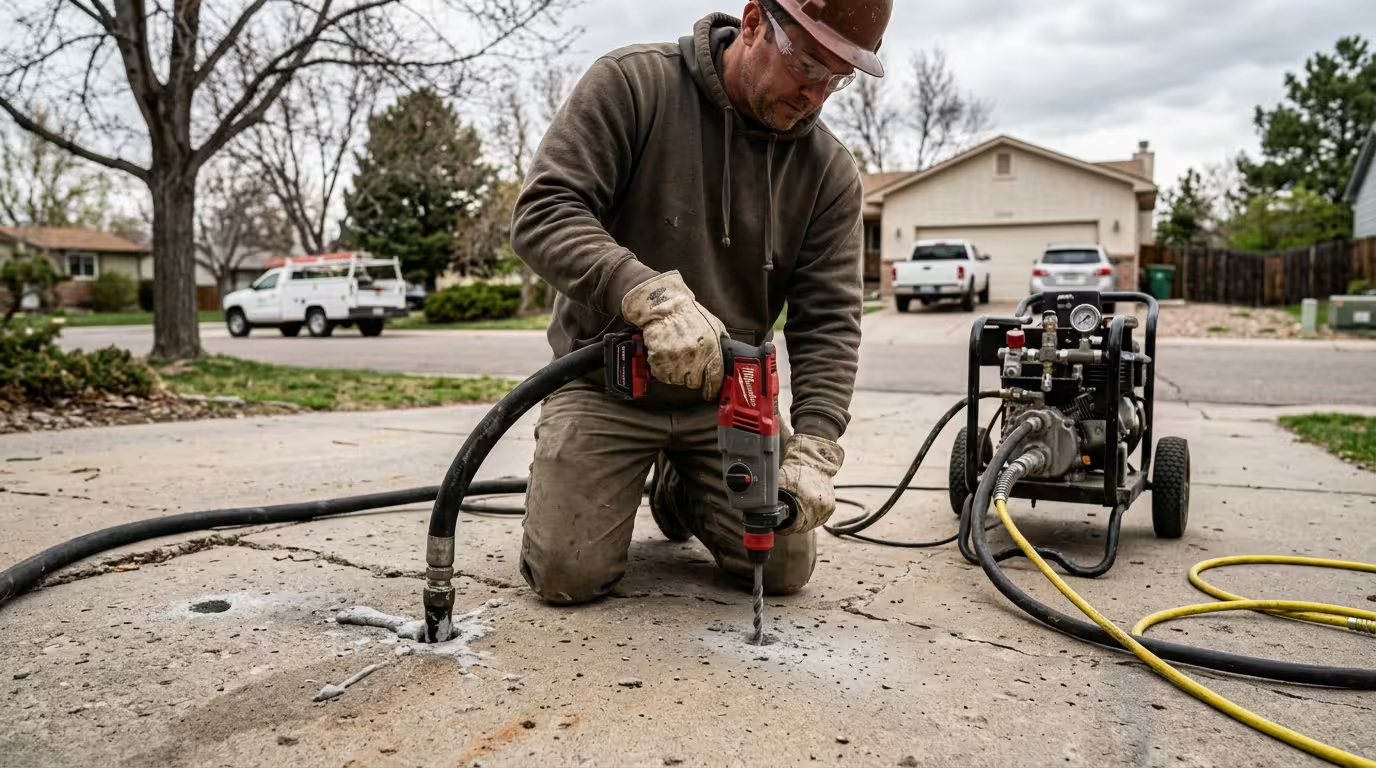
Lifting (also called mud jacking or foam jacking) raises a sunken slab back to level by injecting material underneath it. It works well when:
- The concrete itself is still structurally sound, without deep cracks or crumbling
- The slab has settled unevenly but hasn't broken apart
- You want a faster, lower-cost fix — most lifting jobs are completed in a few hours
- The surrounding grade and drainage haven't changed significantly
Lifting typically costs 40-50% less than replacement and avoids the mess of demolition, making it the go-to option when the slab quality is still good.
When replacement is the smarter long-term choice
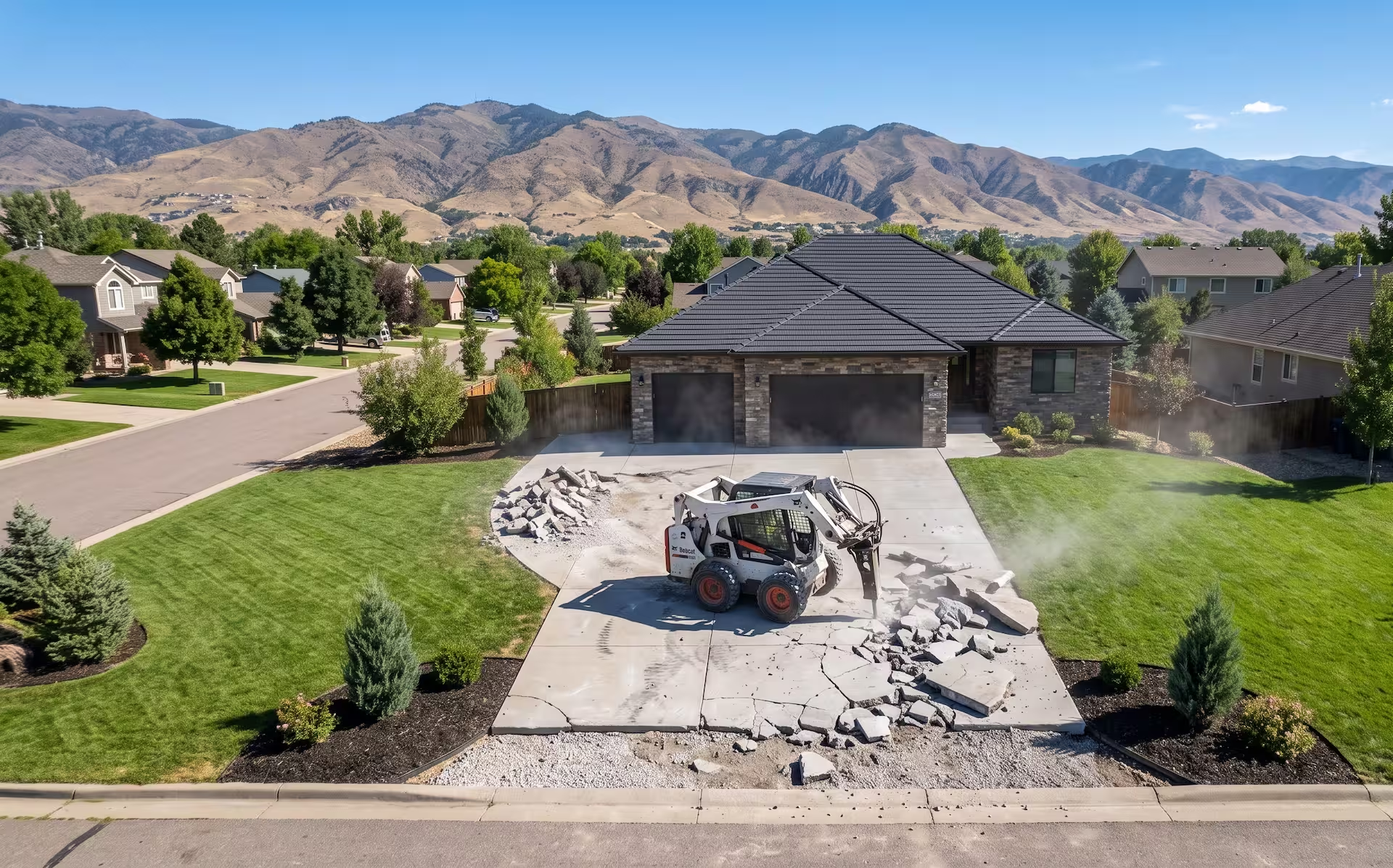
Lifting only works if the slab itself is in good shape. If any of the following apply, replacement is almost always the better investment:
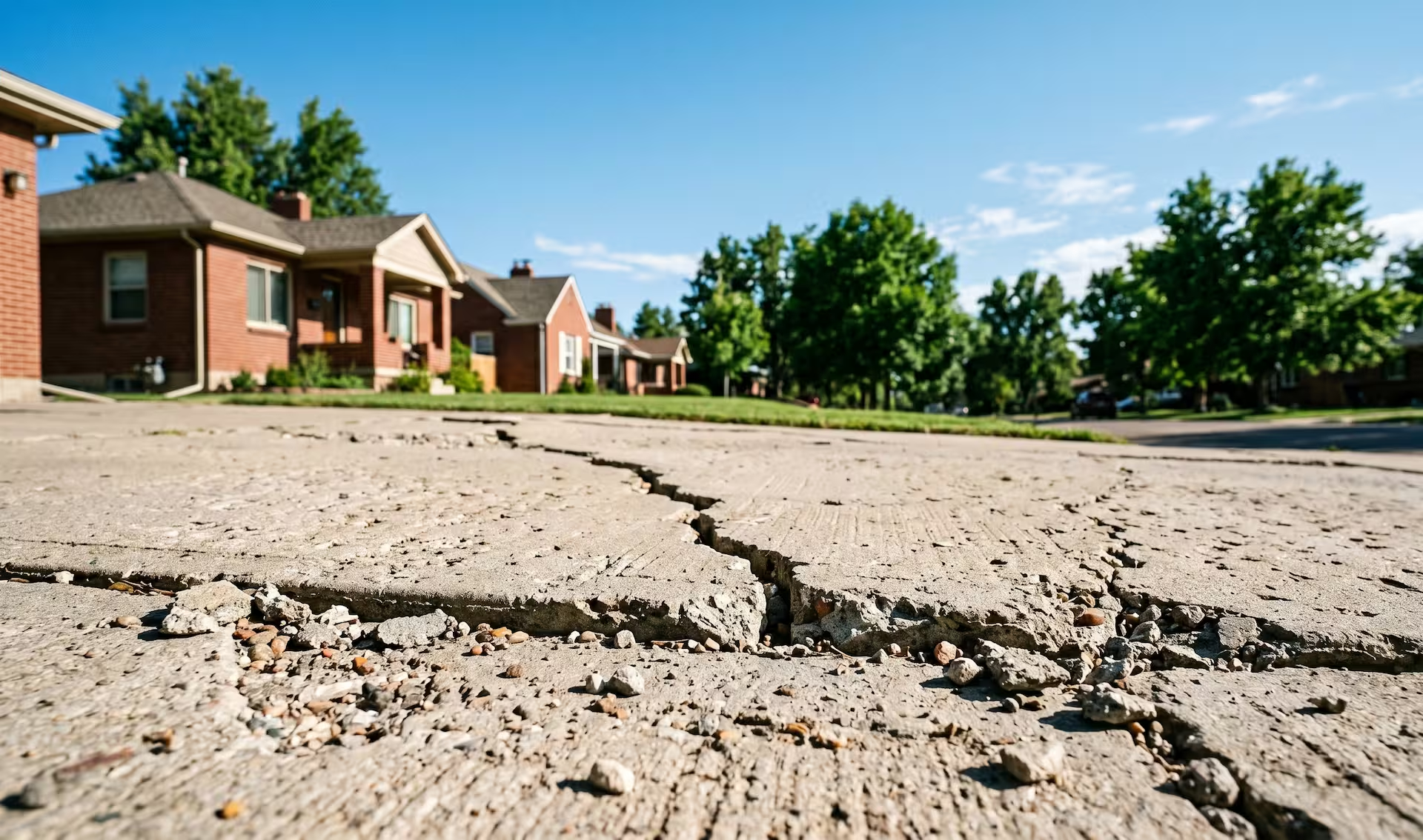
- Multiple deep cracks or broken sections: Lifting a cracked slab just moves the pieces — it doesn't fix them.
- Severe spalling or surface deterioration: A slab that's already flaking or crumbling won't hold up structurally after being lifted.
- Repeated settling in the same spot: If a slab has already been lifted once and sank again, the underlying soil issue needs a permanent fix, not another temporary lift.
- Drainage or grading needs to change: Replacement allows you to correct slope and drainage issues that lifting can't address.
For a closer look at how to evaluate slab condition, see our guide on 5 signs your concrete needs replacement.
Cost and timeline comparison
Here's how the two options generally compare for a standard residential driveway or walkway section in the Denver metro:
- Concrete lifting: Typically $400 to $1,200 per section, completed in a few hours, usable the same day.
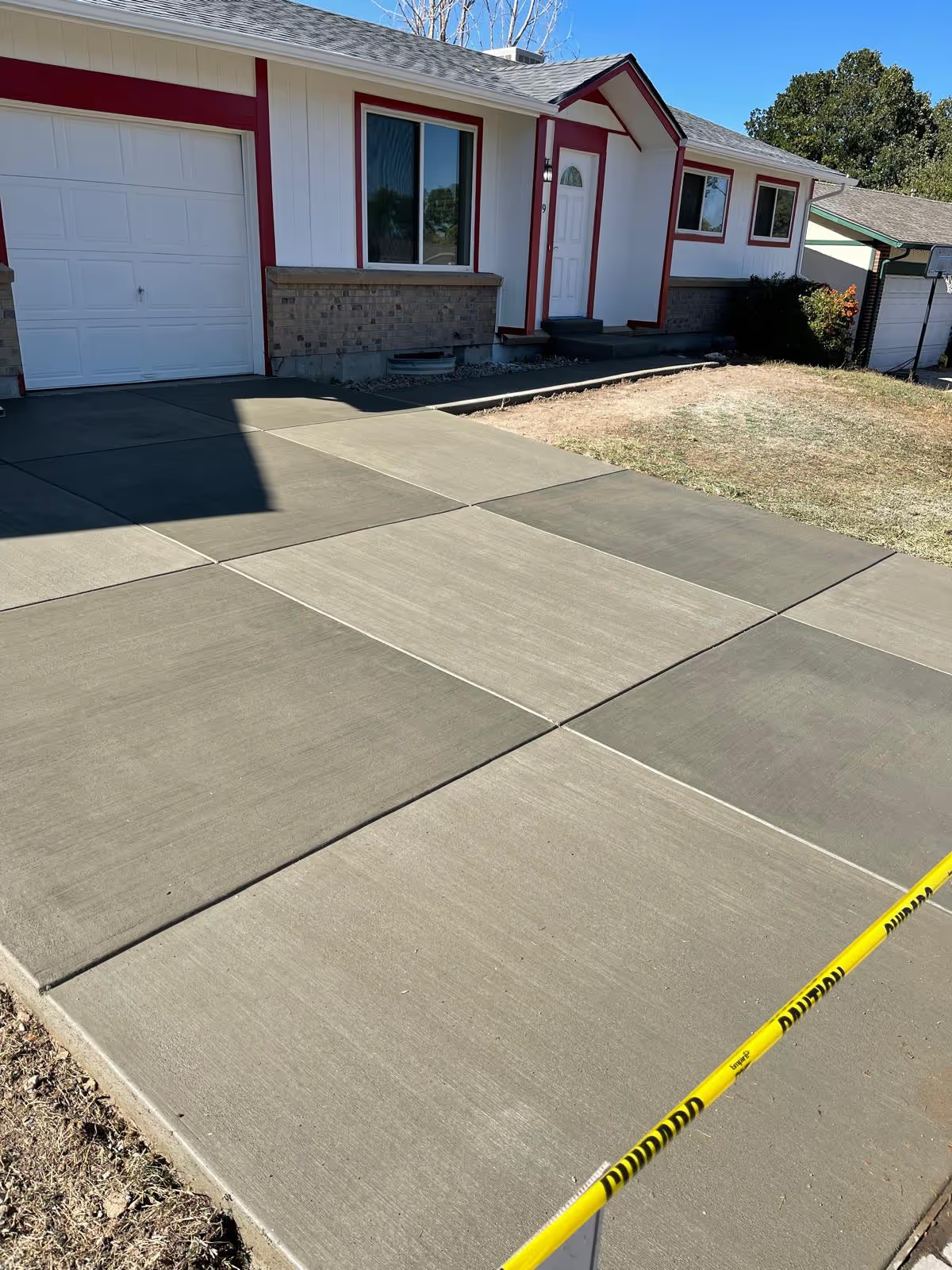
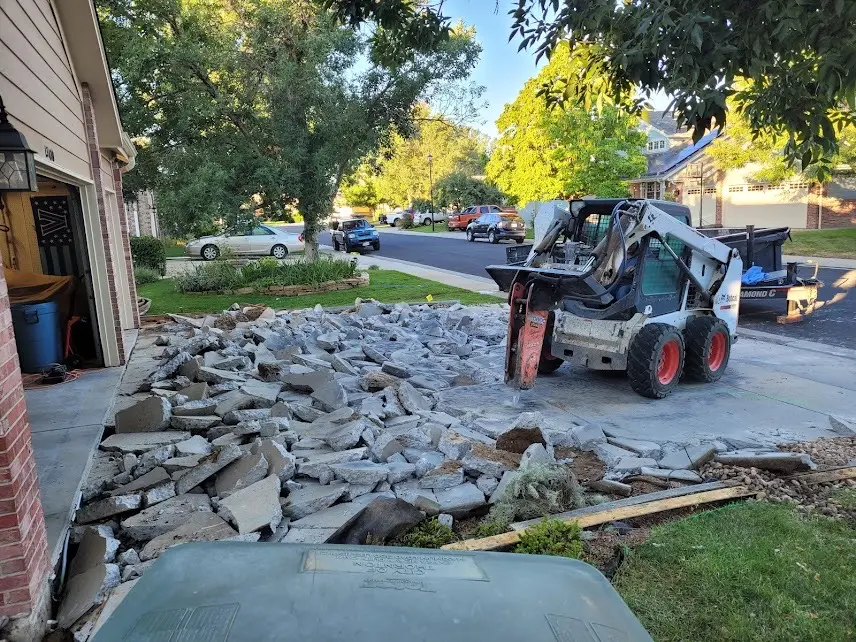
- Full replacement: Typically $8 to $15 per square foot depending on finish, usually completed in 1 to 3 days plus curing time.
For a full breakdown of driveway replacement pricing, see our 2026 driveway replacement cost guide.
Frequently asked questions about concrete lifting in Denver
How long does a lifted slab typically last?
A properly lifted slab with a stable sub-base can last many years, though results depend on soil conditions and whether the original cause of settling has been addressed.
Can any sunken slab be lifted?
Not always. If the slab is cracked, broken into pieces, or severely deteriorated, lifting won't produce a lasting result — replacement is the more reliable fix.
Is concrete lifting messy or disruptive?
Not compared to replacement. Lifting involves small injection holes rather than demolition, so there's minimal mess and no need to remove and haul away old concrete.
How do I know which option is right for my property?
The best way is an on-site assessment. A contractor can evaluate the slab's condition, the underlying cause of settling, and give you an honest recommendation based on what will actually hold up.
Get a free lifting or replacement estimate in Denver
CC Concrete LLC has evaluated and repaired sunken driveways, patios, and walkways across Denver, Thornton, Erie, Brighton, Broomfield, Westminster, Arvada, and surrounding communities for over 30 years. Every project starts with an honest on-site assessment to determine whether lifting or replacement is the right call for your slab. Seniors and military members receive a 10% discount on all projects.
- Licensed and insured — serving Denver metro since 1994
- 500+ residential and commercial concrete projects completed
- Honest lifting-vs-replace recommendations, no upselling
- Air-entrained concrete mix for Denver's freeze-thaw conditions
- Most lifting jobs completed same-day
Getting the call right the first time
Whether lifting or replacement saves you more comes down to the condition of the slab itself, not just how it looks on the surface. A structurally sound slab that's simply settled is usually a great candidate for lifting, while cracked, broken, or repeatedly failing concrete calls for replacement. CC Concrete LLC gives you a straightforward, honest assessment so you invest in the right fix the first time. Schedule your free on-site estimate today →




.avif)

.avif)

.avif)
.webp)