
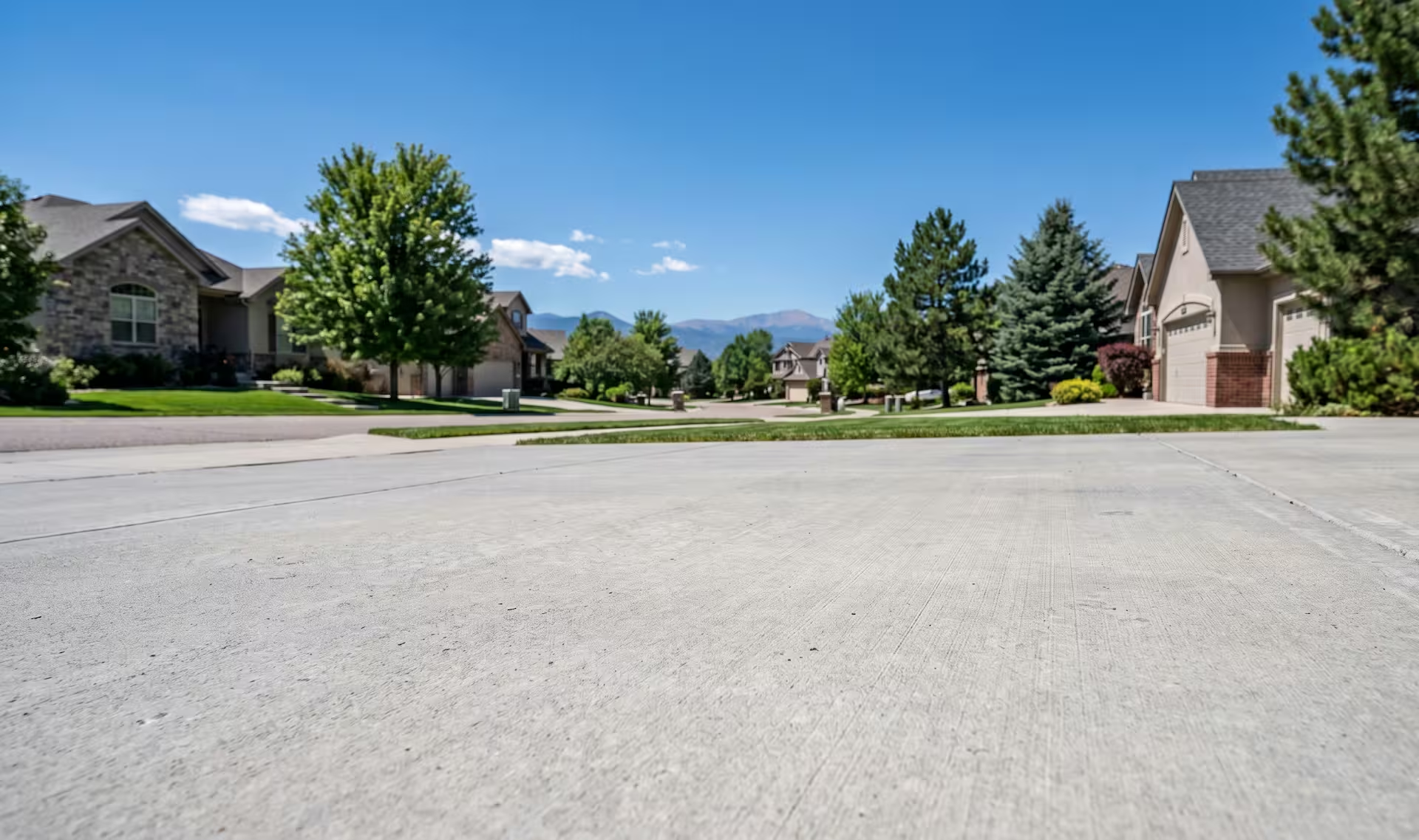
Hiring the wrong concrete contractor in Denver is one of the most expensive mistakes a homeowner can make. A bad pour doesn't just look wrong — it cracks, settles, and fails within a few years, leaving you with a replacement bill that dwarfs what you would have paid to do it right the first time. After 30+ years and 500+ projects across Denver, Thornton, Erie, Brighton, and Broomfield, CC Concrete LLC has seen firsthand what separates a durable installation from a costly disaster.
This guide gives you the specific questions to ask, the red flags to avoid, and the standards a qualified Denver concrete contractor should meet before you sign anything.
Want to skip the research and talk directly to a local expert? Request a free on-site estimate from CC Concrete LLC →
Why choosing the right concrete contractor in Denver matters more than elsewhere
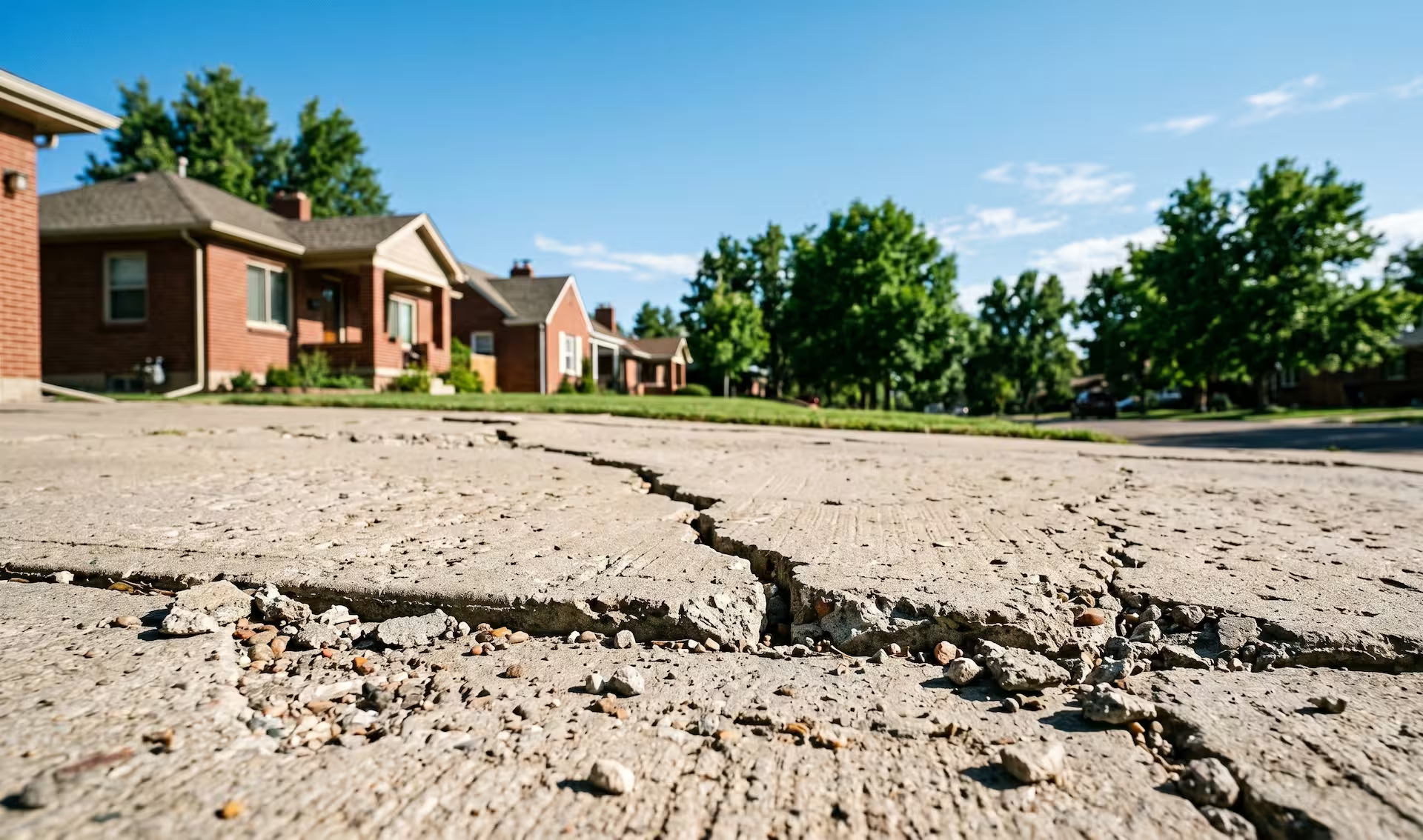
Denver's environment is uniquely demanding on concrete. Expansive clay soils shift with moisture changes. The city averages 160+ freeze-thaw cycles per year. High-altitude UV exposure degrades unsealed surfaces faster than in most U.S. cities. And dry winds pull moisture out of fresh concrete before it has time to cure properly.
A contractor who doesn't account for these conditions — regardless of how low their bid is — will produce work that fails prematurely. Therefore, evaluating a Denver concrete contractor requires looking beyond price and focusing on process, materials, and local experience.
For context on what these conditions mean for your project, see our guide on concrete costs in Denver for 2026.
5 things every qualified Denver concrete contractor should provide
Before you accept any estimate or sign any contract, a qualified concrete contractor in Denver should be able to confirm all of the following without hesitation:
1. License and insurance
Any contractor working on your property in Colorado should carry general liability insurance and workers' compensation coverage. Ask for certificates before work begins — not after. An unlicensed or uninsured contractor leaves you personally liable for any injuries or property damage that occur on your job site.
2. A detailed, itemized written estimate
A professional estimate should specify the concrete PSI strength, rebar or mesh type and spacing, sub-base depth and compaction method, finish type, and a clear payment schedule. Vague estimates — "concrete driveway, 500 sq ft, $4,200" — hide missing essentials that add cost later or never get done at all.
3. Local references you can actually verify
Ask for references from projects completed at least two to three years ago in the Denver metro. Colorado's freeze-thaw cycles are the real test of a pour — a driveway that looks great after six months may tell a very different story after two winters. If a contractor can't provide verifiable local references, that's a red flag.
4. Rebar specification for driveways and load-bearing slabs
In Denver's clay soil conditions, rebar is not optional for driveways, garage floors, or any load-bearing slab. Wire mesh is a cheaper alternative — but it doesn't provide the structural integrity needed to handle Colorado's soil movement and freeze-thaw pressure. If a contractor proposes mesh only for a driveway, ask why. A good contractor will explain the difference and recommend rebar without being prompted.
5. A clear plan for sub-base preparation
Proper excavation, gravel base installation, and compaction are what prevent settling and cracking in Denver's clay soils. A contractor who skips or minimizes sub-base work is cutting the single most important corner in concrete installation. Ask specifically: how deep will you excavate, what gravel base will you use, and how will you compact it?
Red flags to watch for when comparing Denver concrete contractors
Not every low bid is a deal. In fact, the lowest bid on a concrete project is often the most expensive decision a homeowner makes — because it usually means something critical is missing. Here are the warning signs to watch for:
- No written contract or vague scope of work. If it's not in writing, it doesn't exist. A professional contractor puts everything in writing before a single shovel hits the ground.
- No mention of sub-base preparation. If an estimate doesn't specify excavation depth and gravel base, assume it's not included.
- Unusually low pricing. In Denver, a properly installed concrete driveway with rebar and sub-base work starts around $8 per square foot. Quotes significantly below that almost always mean missing materials or labor shortcuts.
- Pressure to decide immediately. Reputable contractors don't need to pressure you. High-pressure tactics are a classic sign of a contractor who relies on rushed decisions rather than quality work.
- No local references or portfolio. Denver's climate is specific. A contractor without verifiable local project history has no proven track record in the conditions your concrete will actually face.
- Cash-only payment requirements. While cash is a valid payment method, requiring cash only — particularly upfront — is a common indicator of an unlicensed or uninsured operation.
Questions to ask before hiring a concrete contractor in Denver
These are the specific questions we recommend asking every contractor you're considering — and what good answers look like:
What to expect from the concrete installation process in Denver
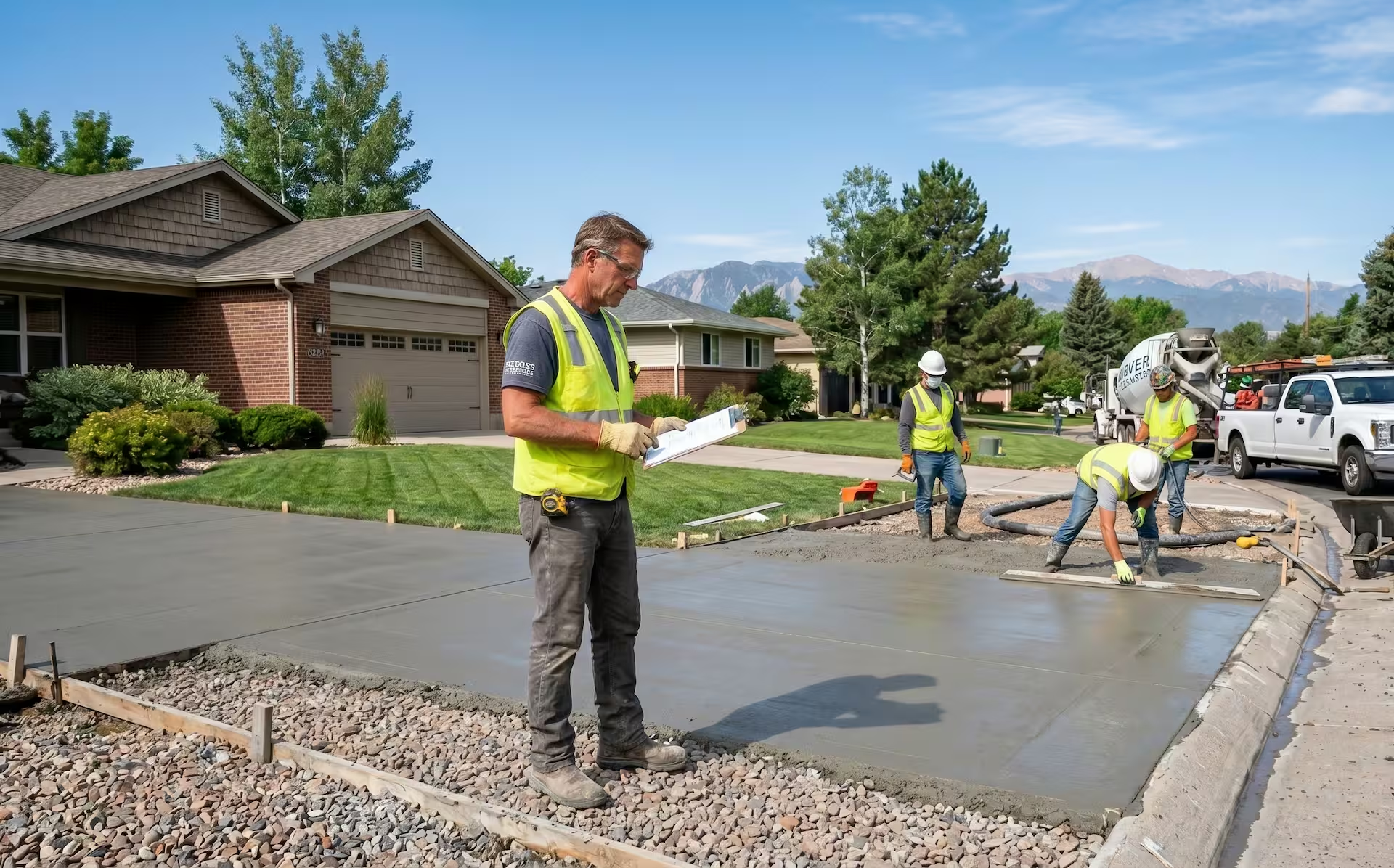
Understanding the installation sequence helps you evaluate whether a contractor is cutting corners. A properly executed concrete project in Denver follows this sequence:
- Site evaluation: Assessment of soil conditions, drainage, existing concrete, and access — this is what a free on-site estimate should include.
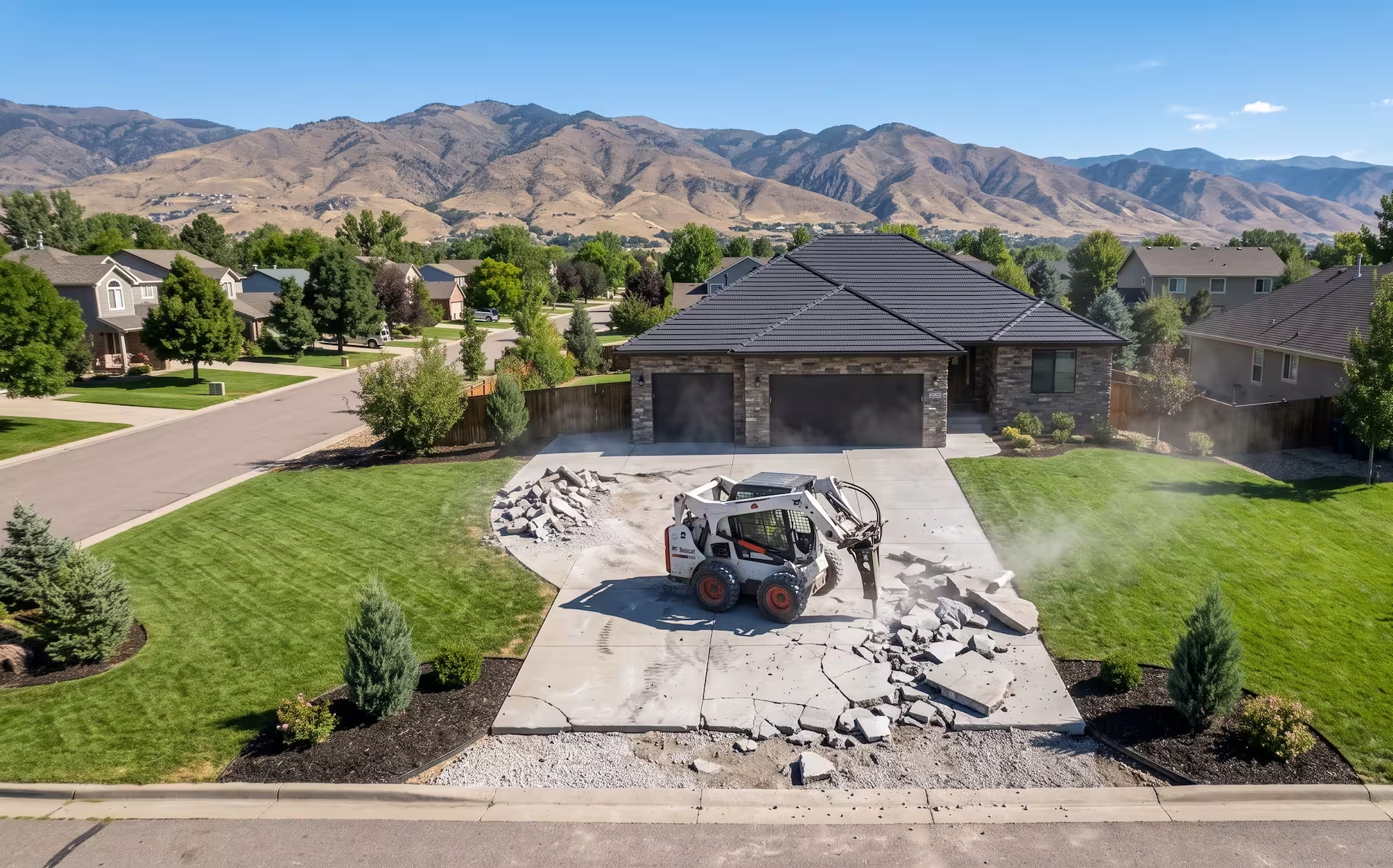
- Excavation: Removal of soil to the appropriate depth for the gravel base and concrete slab thickness.
- Sub-base installation: Compacted gravel base — typically 4 to 6 inches — to provide a stable, draining foundation.
- Formwork: Wood or metal forms set to define the shape and thickness of the slab.
- Rebar installation: Steel reinforcement placed and tied before the pour.
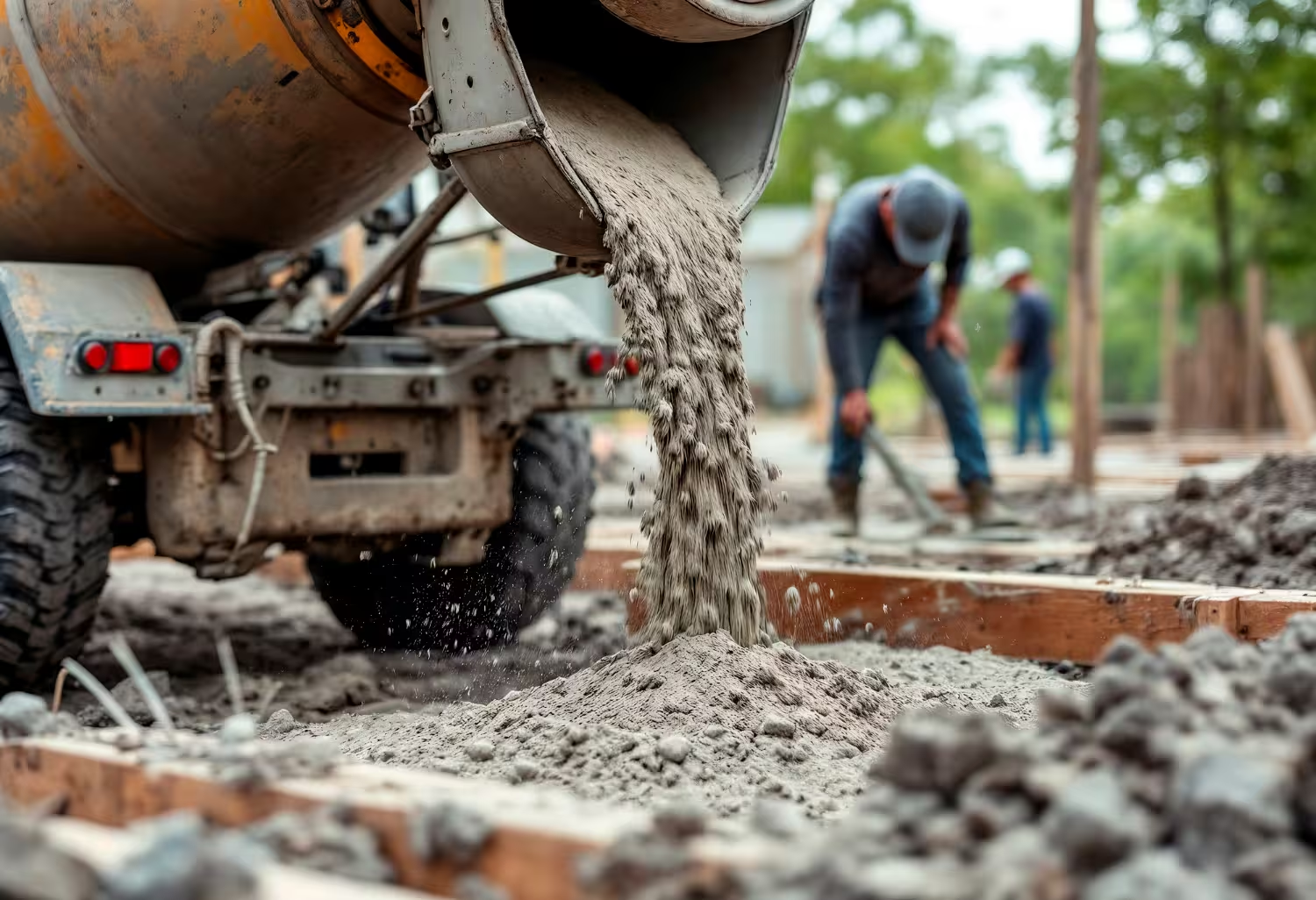
- Concrete pour: Air-entrained mix poured, screeded, and finished to specification.
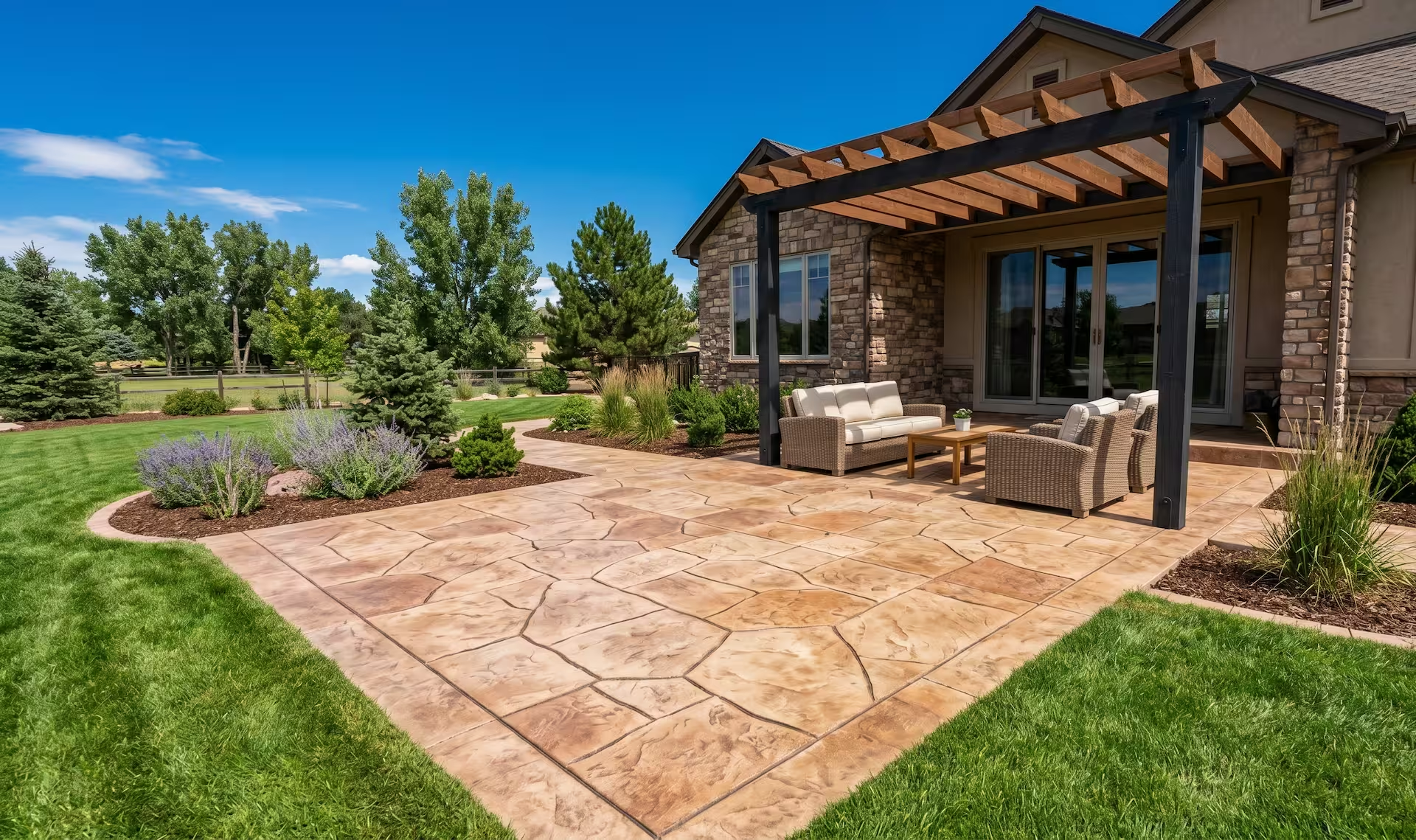
- Finishing and texturing: Broom finish, stamping, or other surface treatment applied at the right consistency.
- Curing: Curing compounds applied to prevent premature moisture loss in Denver's dry conditions.
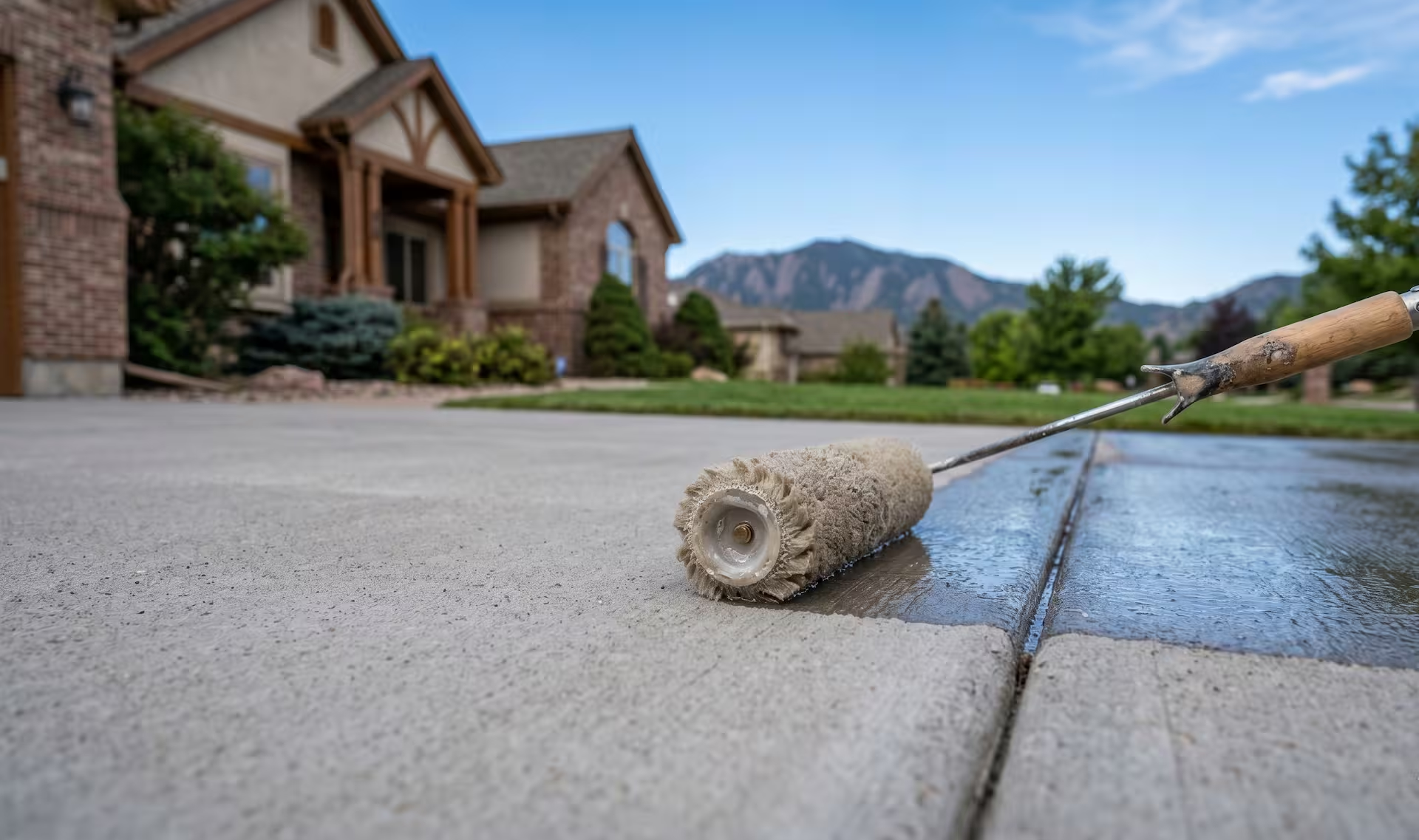
- Sealing: Applied after curing to protect the surface from UV, moisture, and deicing salt.
Most residential driveways and patios in Denver are completed in 1 to 2 days. Additionally, you can walk on the surface after 24 to 48 hours, with full vehicle use after 7 to 10 days.
Frequently asked questions about hiring a concrete contractor in Denver
How many estimates should I get?
Two to three estimates is a reasonable range. More than that rarely adds useful information — and the lowest bid is almost never the right choice. Focus on the detail in the estimate and the contractor's ability to answer technical questions, not just the bottom line number.
How much should I pay upfront?
A reasonable deposit for a concrete project is typically 10% to 30% of the total cost. Be cautious of contractors requiring more than 50% upfront — particularly before any work has begun. Progress payments tied to project milestones are standard practice.
Do I need a permit for a concrete driveway in Denver?
Permit requirements vary by municipality. In communities like Thornton, Erie, Westminster, and Brighton, work near the right-of-way or driveway apron often requires a permit. CC Concrete LLC researches and handles permit requirements on every project we complete.
What warranty should a concrete contractor offer?
Concrete warranties vary, but a reputable contractor should stand behind their work for workmanship defects. Ask specifically what the warranty covers — structural cracking vs. surface cracking, and for how long. Get it in writing before the project begins.
Work with a concrete contractor Denver homeowners trust
CC Concrete LLC has served Denver, Thornton, Erie, Brighton, Broomfield, Westminster, Northglenn, and surrounding communities for over 30 years. Every project includes a free on-site estimate, transparent line-item pricing, rebar reinforcement, proper sub-base preparation, and a crew that shows up on time and cleans up completely when finished. Seniors and military members receive a 10% discount on all projects.
- Licensed and insured — Colorado concrete contractor since 1994
- 500+ completed residential and commercial projects
- Free on-site estimates with itemized, transparent pricing
- Rebar reinforcement and air-entrained mix standard on all slabs
- Permit research and compliance handled on every project
The right concrete contractor in Denver makes all the difference
In Denver's demanding climate, the difference between a driveway that lasts 30 years and one that cracks in three comes down almost entirely to who installs it. Furthermore, the cheapest bid rarely reflects the true cost of ownership — because replacement costs far more than getting it right the first time. Take the time to evaluate your contractor properly, ask the hard questions, and choose based on process and proven local experience — not just price. CC Concrete LLC offers free on-site estimates across the Denver metro with no pressure and no surprises. Schedule yours today →




.avif)

.avif)


.avif)
.webp)